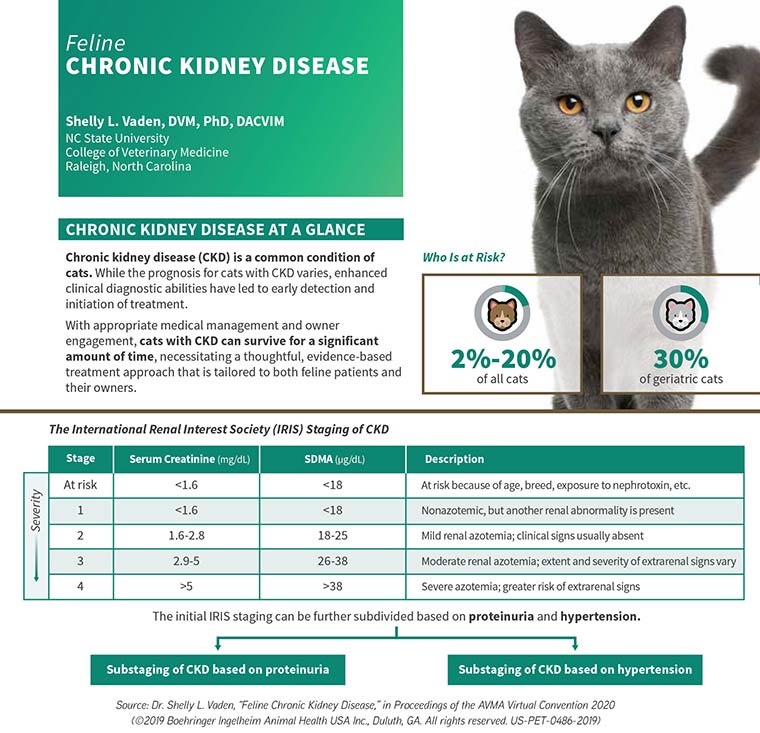
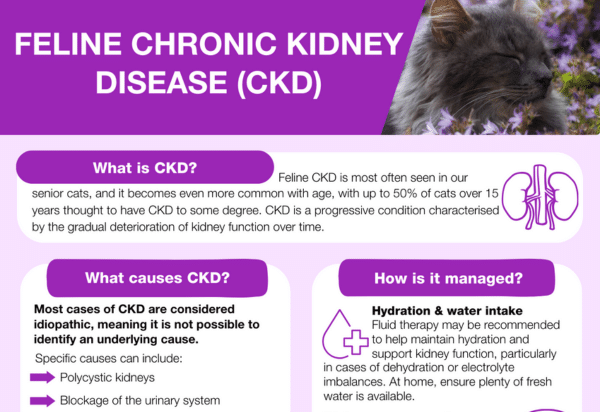
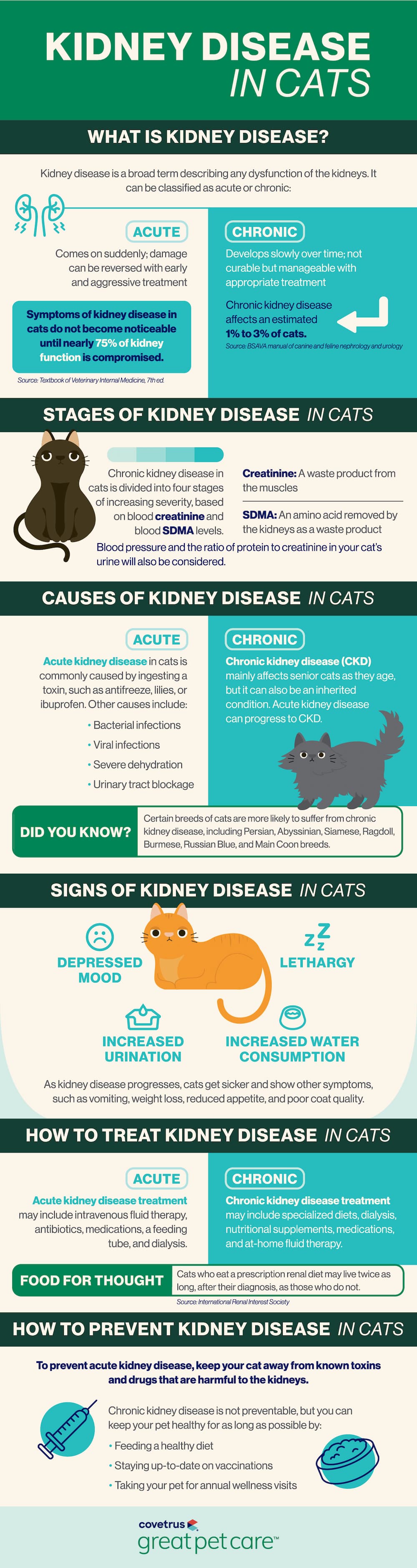
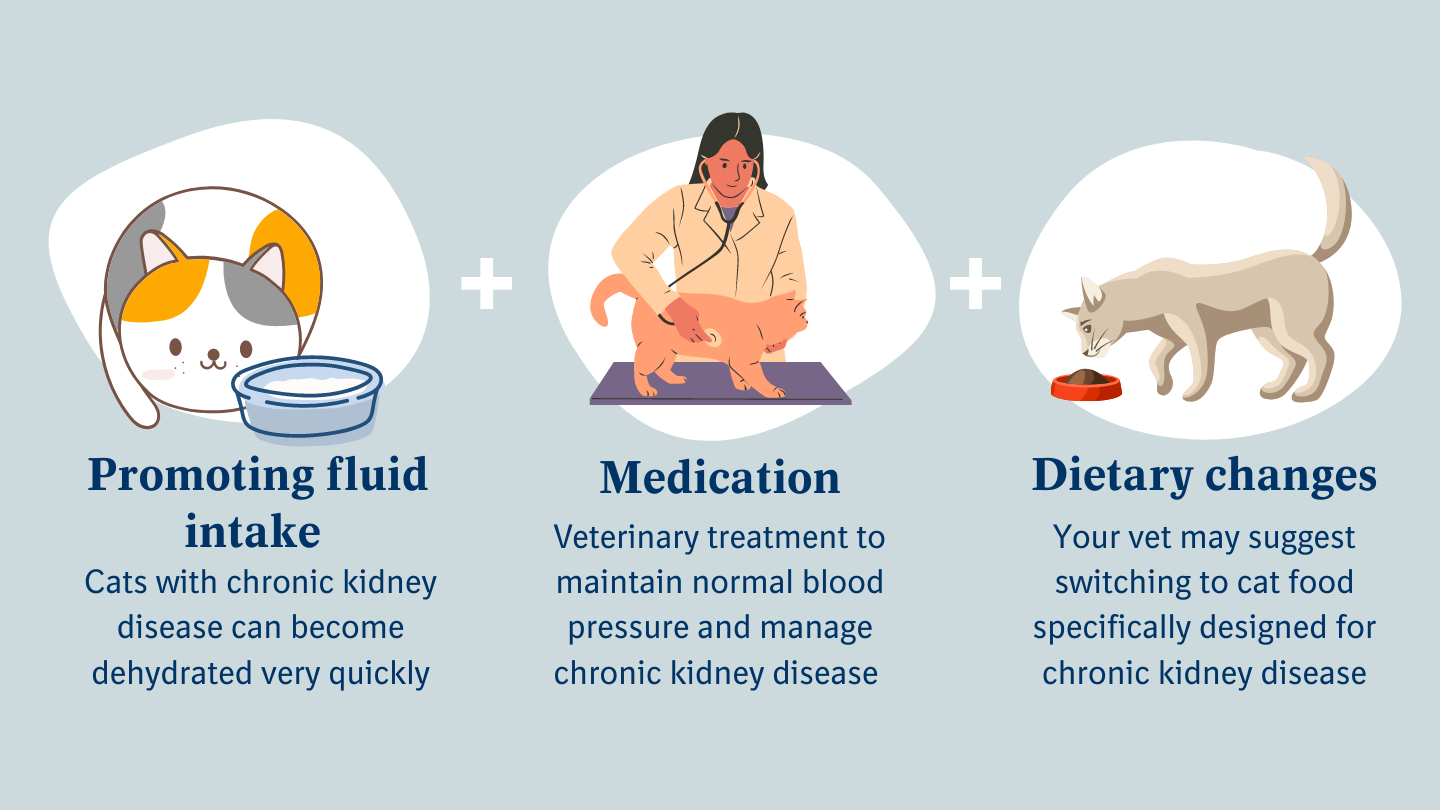
In the past, experts believed that cats were not susceptible to infection, but it is now thought that the bacteria might play a role in longterm kidney disease. As such, cats are unlikely to show the signs of leptospirosis seen in other animals. The bacteria is shed in the urine of infected animals. A few studies have demonstrated a potential association between feline chronic kidney disease and Leptospira spp. infection, but this association needs further investigation. Although the precise role of Leptospira spp. as an etiologic agent of KD in cats remains unclear, the significant difference found in the serologic status between H and KD cats suggests that leptospirosis might be an underdiagnosed cause of acute or chronic KD in cats. Urinary shedding of leptospires in naturally infected cats has been reported, with a prevalence of up to 68%. Infection in cats has been associated with the consumption of infected prey, especially rodents. Thus, outdoor cats have a higher risk of becoming infected. Leptospirosis is a disease that can affect people and animals, including pets, farm animals, rodents, wild animals like feral swine, and marine mammals. The bacteria that cause leptospirosis are spread through the urine (pee) of infected animals. Clinical illness is rare in cats, however, it is now thought that leptospirosis can lead to chronic kidney disease in some cats. Once inside the cat, the bacteria migrate through the bloodstream and lymphatic tissue and rapidly spread throughout the body where it invades the organs and tissues. Learn about the veterinary topic of Renal Dysfunction in Dogs and Cats. Find specific details on this topic and related topics from the MSD Vet Manual.
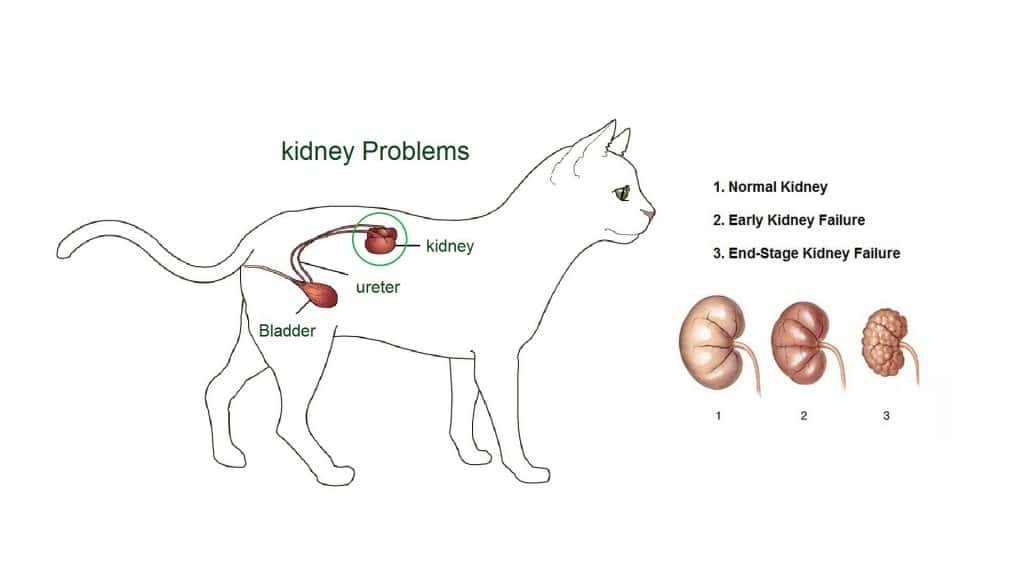
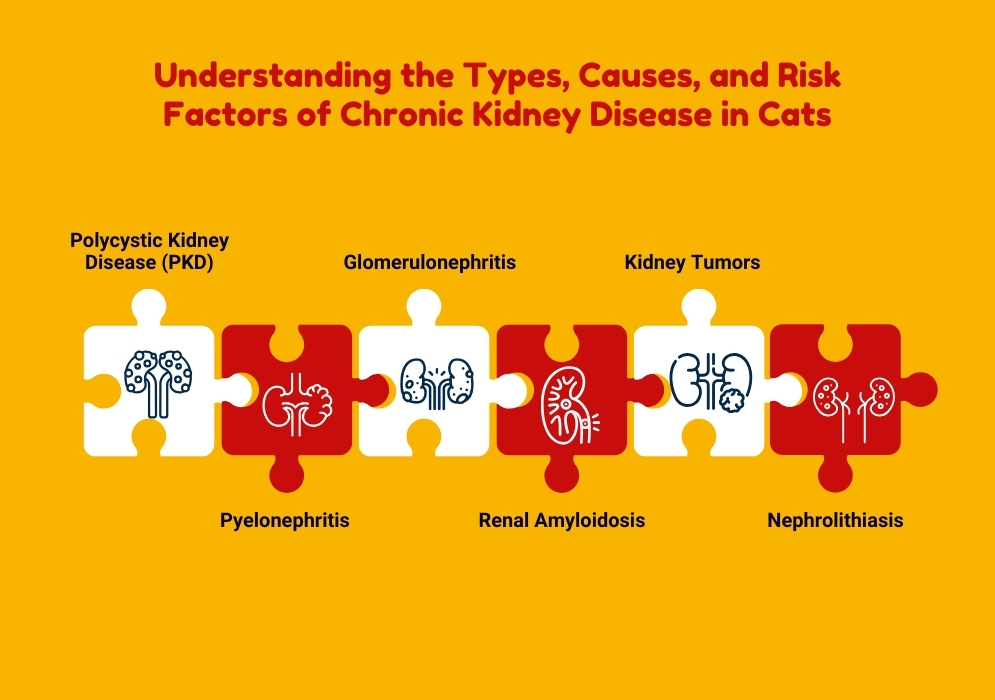
As we can see from the illustration, Feline Chronic Kidney Disease And Leptospirosis has many fascinating aspects to explore.